Designing the product experience for a live vet-tech startup — from the first flows to a design system the team can build on.
Role
Product designer
When
2025 — Present
What
Product design · Live vet-tech startup
A product without a spine
Dog and Dog is a live vet-tech startup on a mission to make veterinary care simpler for pet owners and clinics. I came on board to own product design — turning an early idea into an interface people actually want to use.
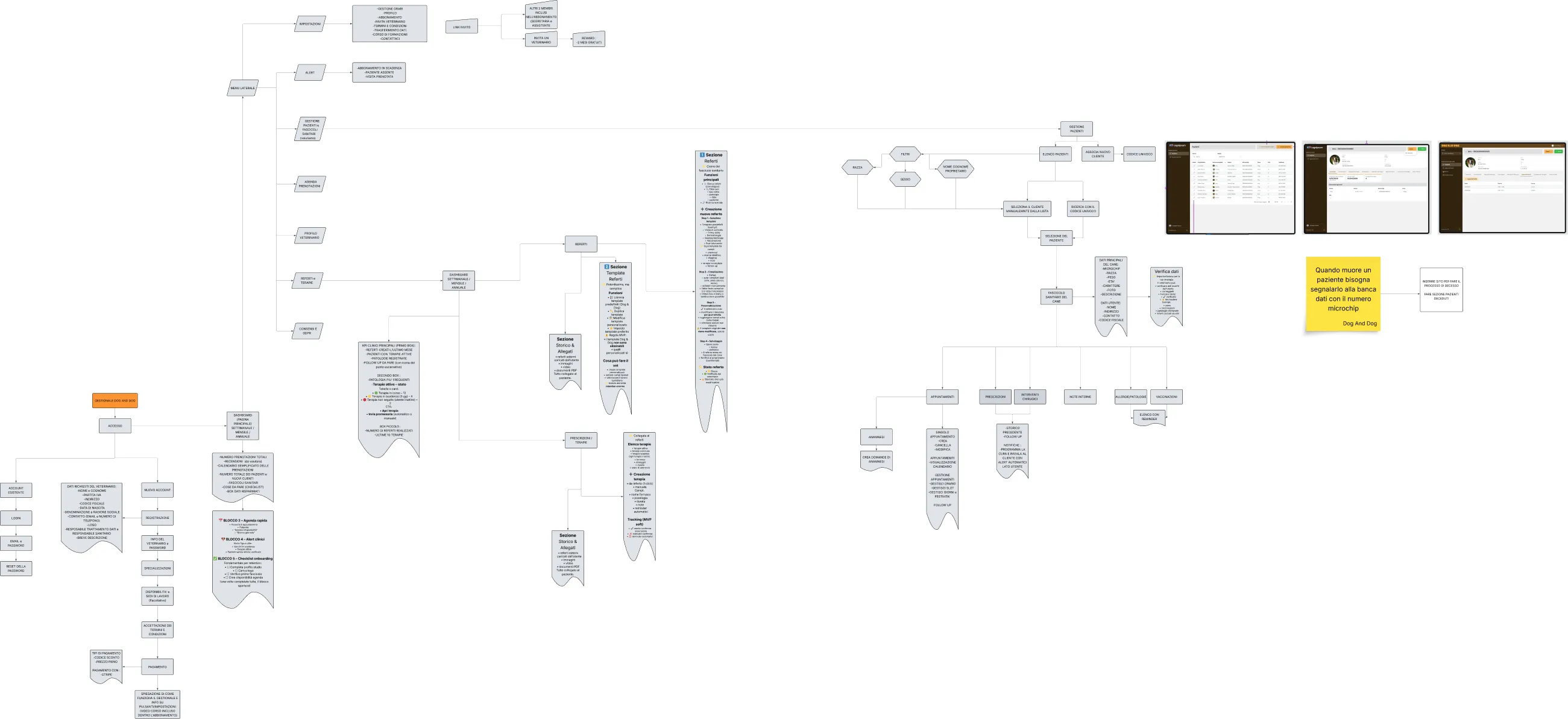
When I joined, the product was a set of features without a spine: no shared components, inconsistent flows, and screens designed one at a time. The opportunity wasn't only to make things prettier — it was to give the product a coherent structure it could grow on.
Working directly with the founder and engineering, I moved between three jobs: designing the core flows, making product decisions under real constraints, and laying down a design system so the team could ship consistently without me in every loop.
Three decisions that shaped the product
System first, screens second
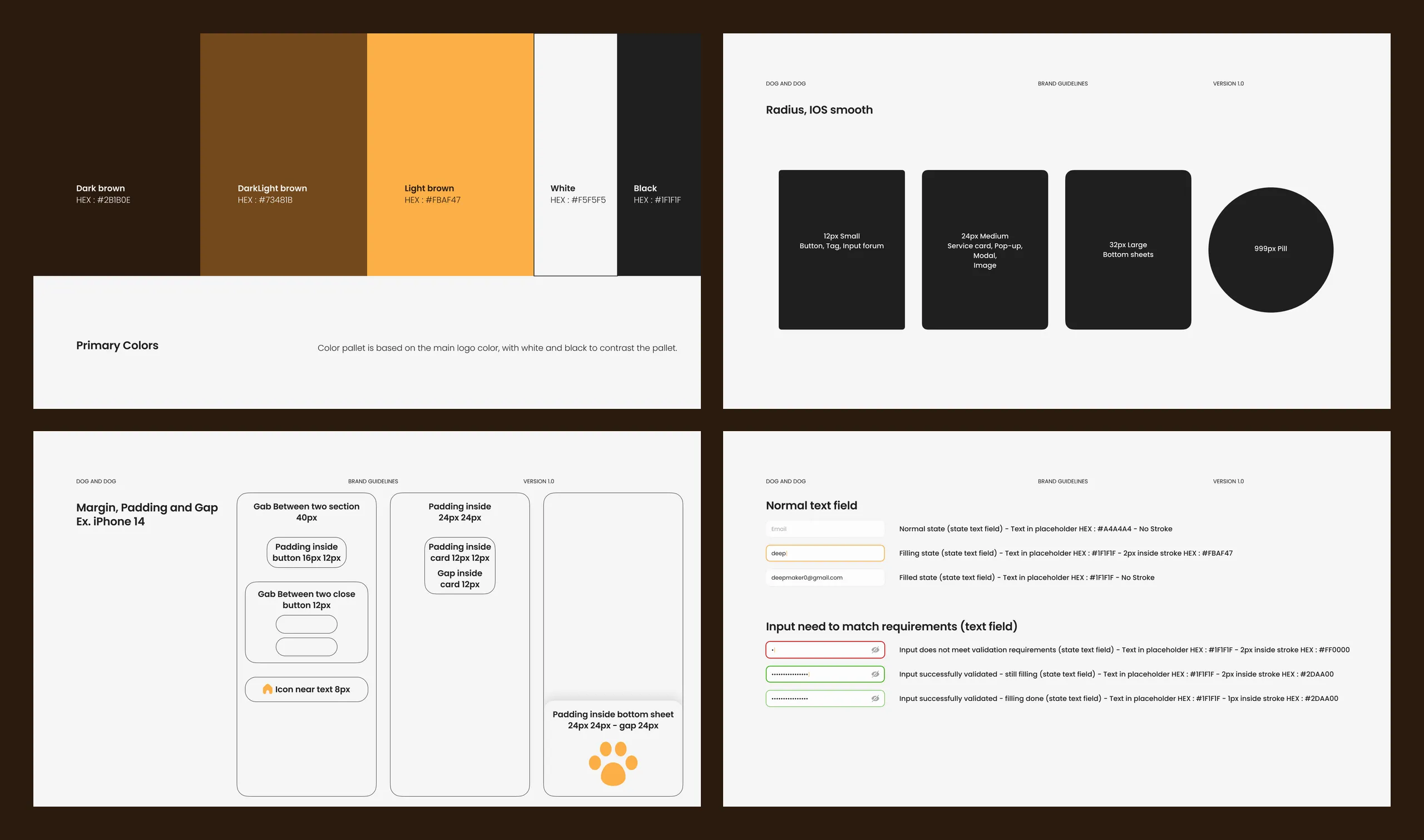
The fastest way to slow a product down is to design every screen from scratch. Before adding features, I set the foundation — color and type scale, spacing, and a small set of components. New screens became assembly, not invention, and the product stopped drifting visually.
One product, two mindsets
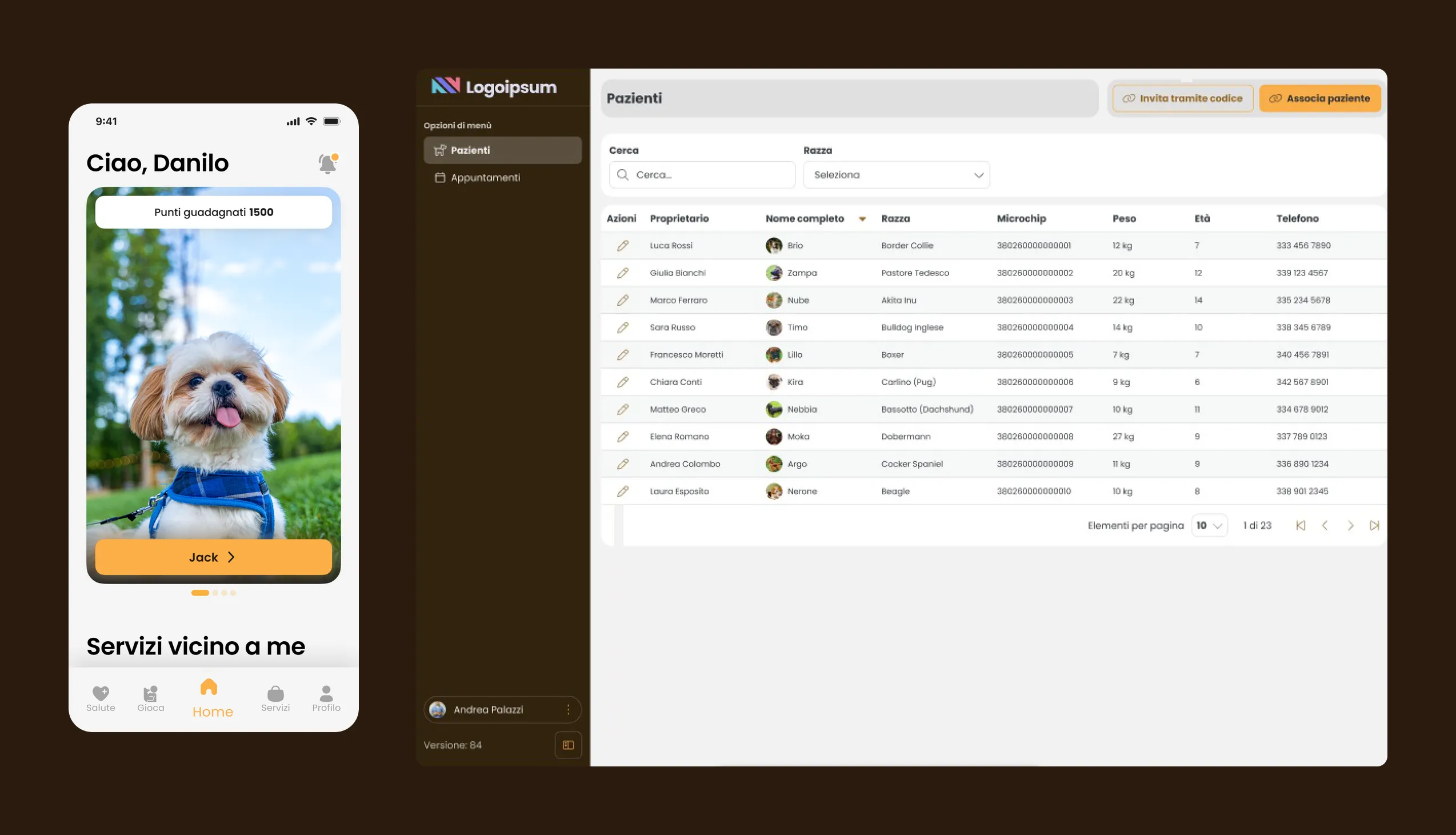
Pet owners and clinics use the same product with very different goals — reassurance versus efficiency. Instead of two disconnected apps, I designed shared primitives with context-aware density: calmer, guided flows for owners; faster, information-dense views for professionals.
Cut the core flow to its essentials
The main task carried too many steps and too many decisions. I mapped the flow end to end, removed everything that didn't move the user forward, and set smart defaults for the rest. Fewer choices, clearer state, a shorter path from intent to done.
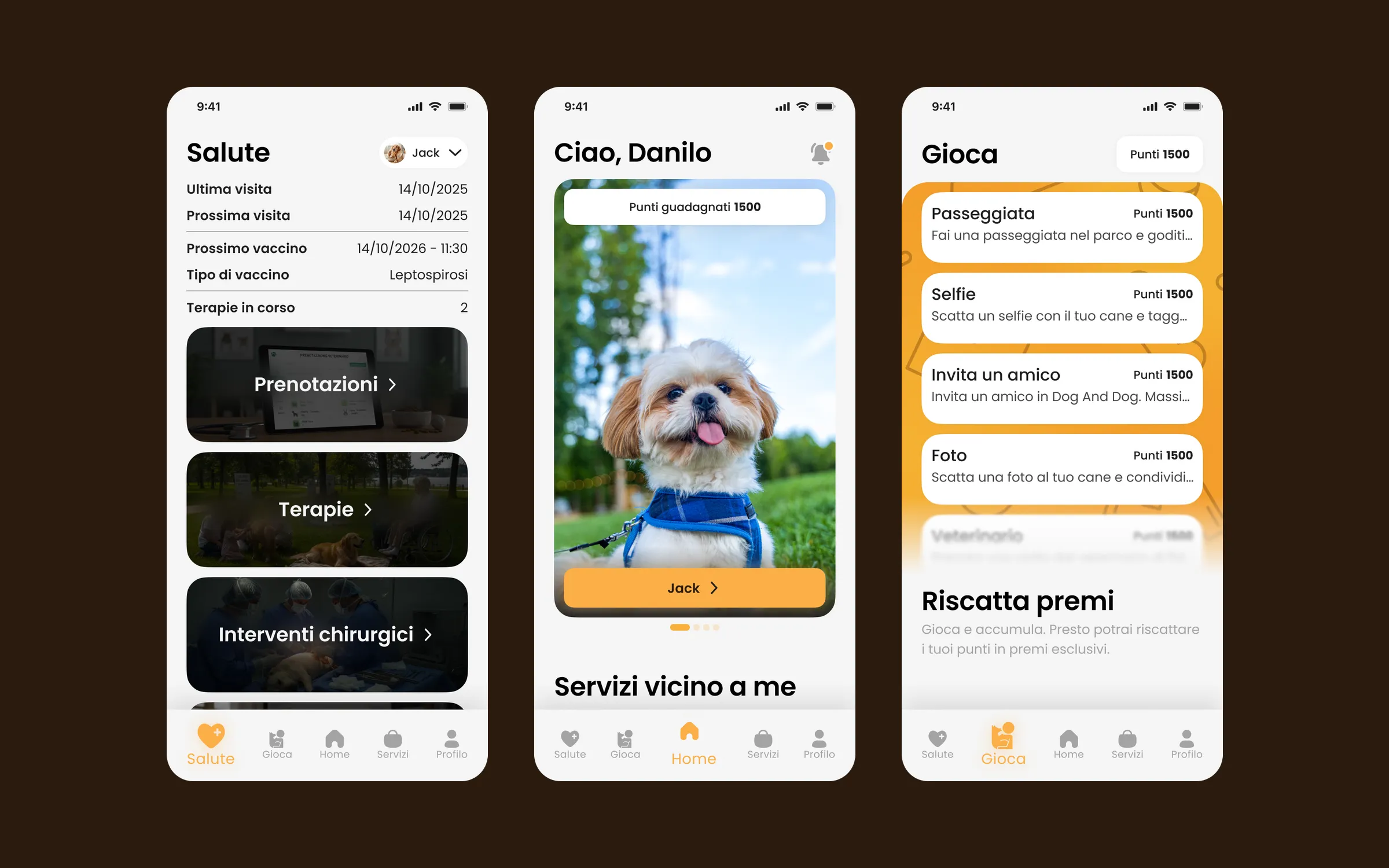
Final screens
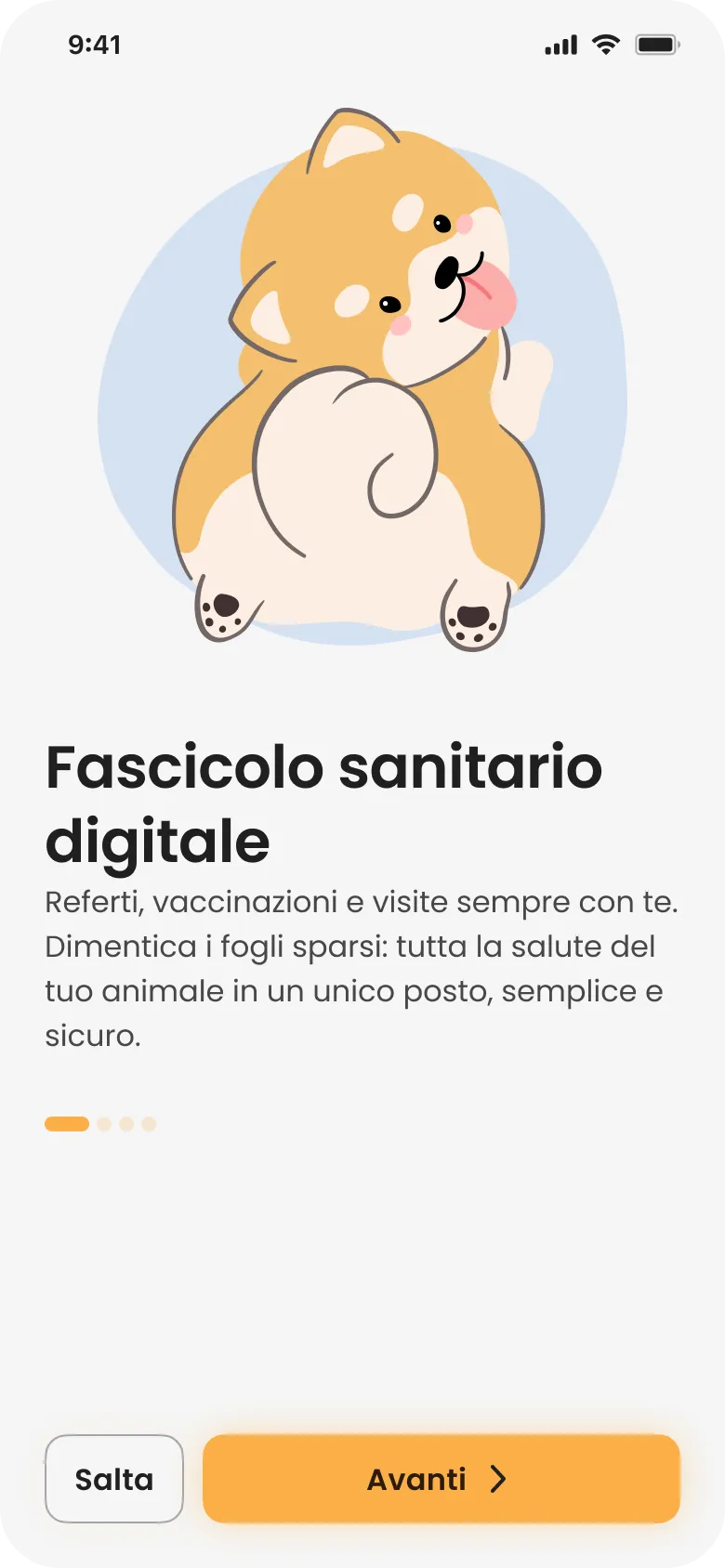
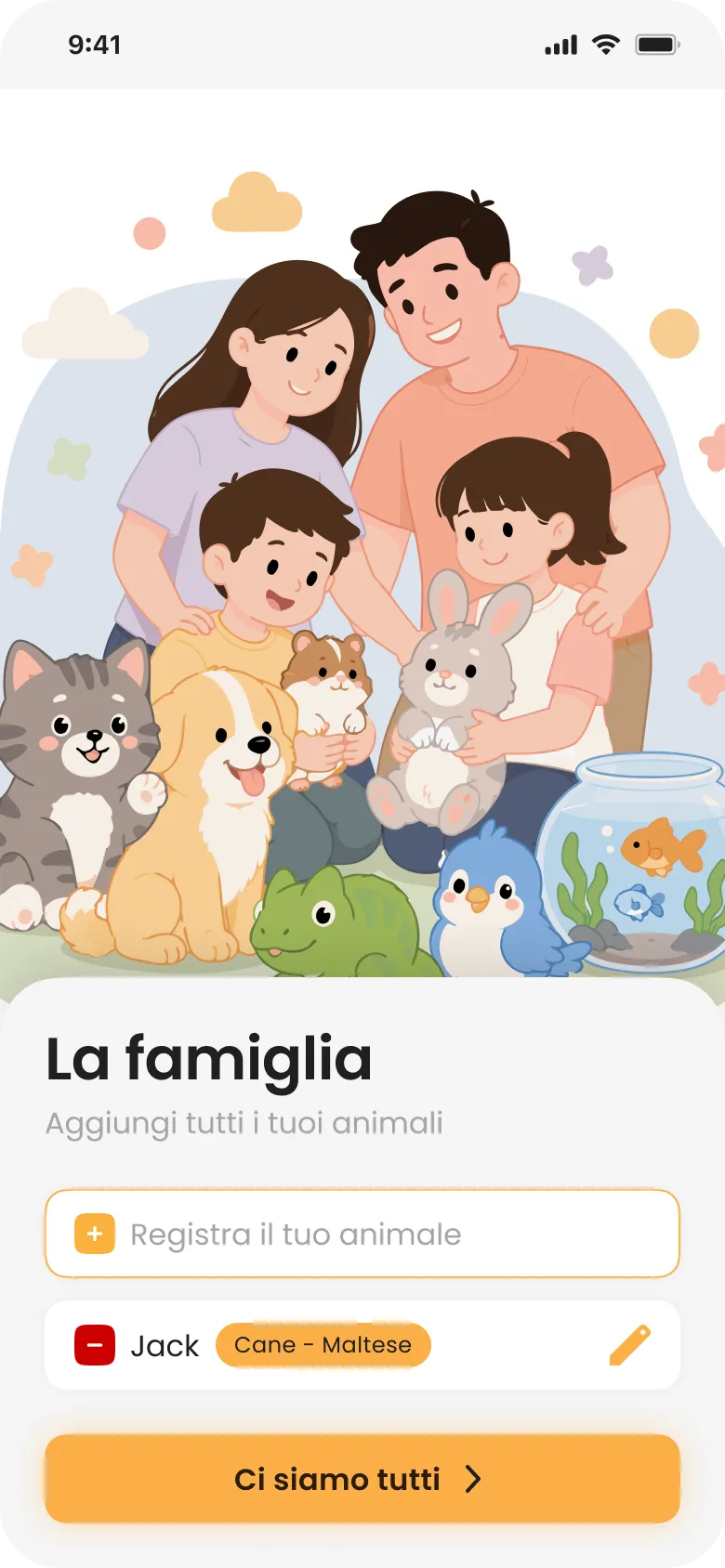
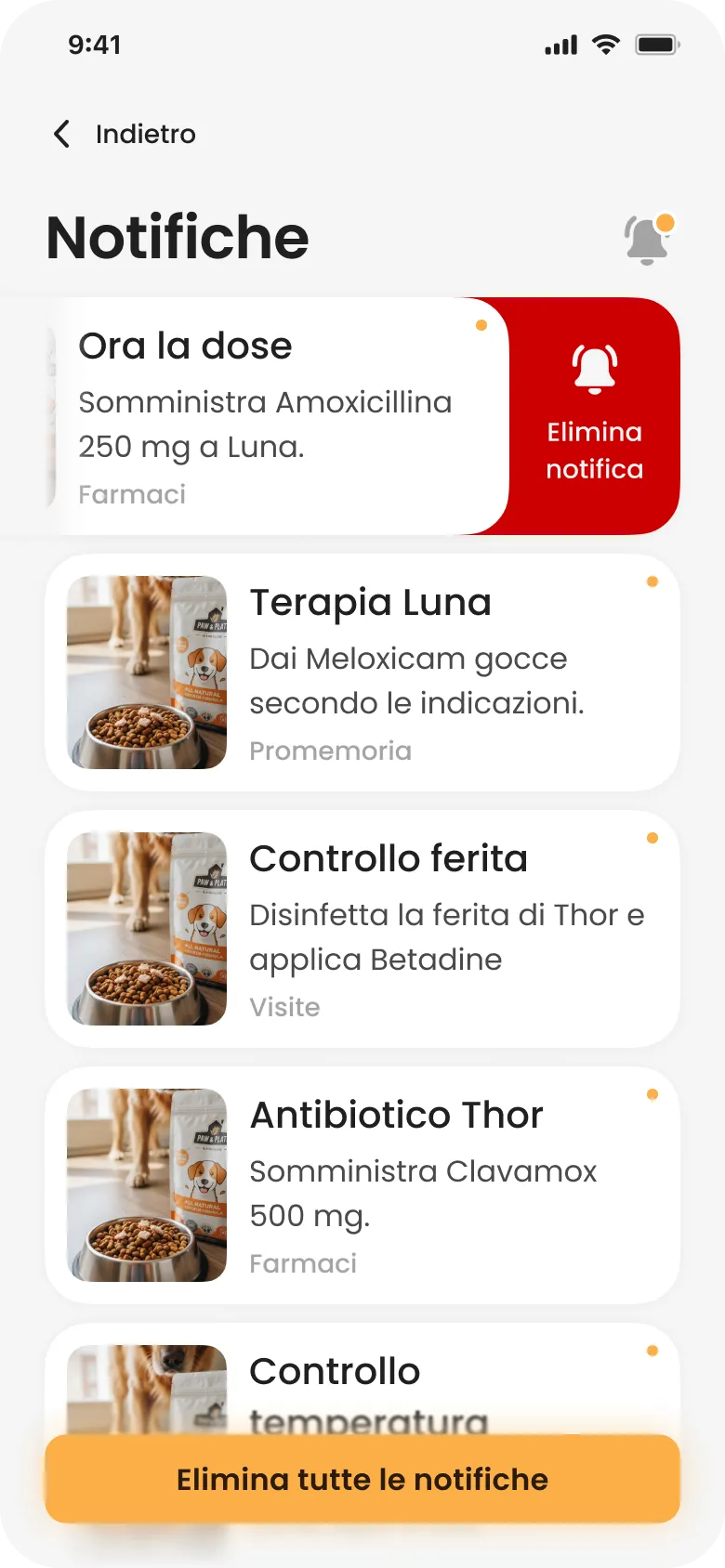
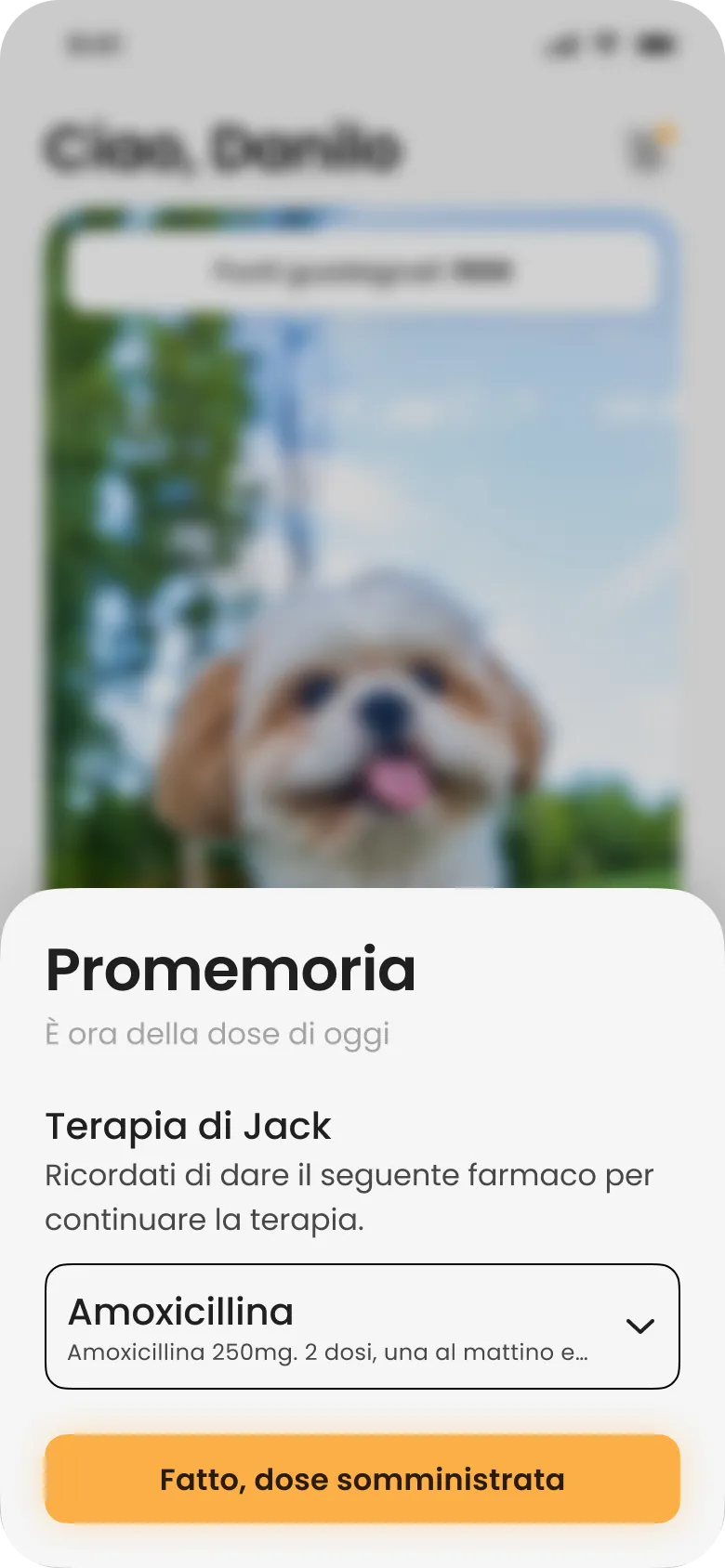
OnboardingYour familyNotificationsDose reminder
What changed
One visual language across the product — same components, same patterns, everywhere.
Faster design-to-dev handoff: engineering builds from a shared library instead of rebuilding screens.
Documented product decisions, so the team keeps moving without design in every loop.